Theodor Fontane
vote now
add a comment
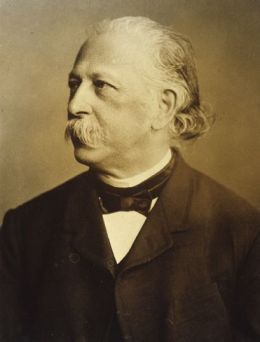
Biography Theodor Fontane (1819 - 1898)
German writer
Was born on 30 dec 1819.
Died on 20 sep 1898, at 78 years old.
Died on 20 sep 1898, at 78 years old.
Origin country Germany
Theodor Fontane was one of the most important German writers of the nineteenth century, recognized as a leading representative of German literary realism. Through his novels, novellas, and journalistic writings, Fontane offered a lucid and deeply human portrayal of Prussian society, analyzing with subtlety social relationships, the moral values of his time, and the conflict between tradition and modernity.
Origins and education
Theodor Fontane was born on December 30, 1819, into a family of Huguenot origin. He initially pursued a practical career, qualifying as a pharmacist, a profession that provided him with financial stability but did not satisfy his intellectual aspirations. His true interests turned early toward literature, history, and journalism—fields in which he would later distinguish himself.
Journalistic activity and literary maturity
In the first part of his life, Fontane worked extensively as a journalist and correspondent, including outside Germany. This experience brought him into direct contact with the political and social life of his era, contributing decisively to his realist style and to his keen ability to observe human behavior.
Literary success came relatively late, after the age of fifty, when Fontane began publishing substantial, well-structured novels focused on psychological analysis and faithful depictions of social environments.
Central themes of his work
The work of Theodor Fontane is characterized by:
- the analysis of social relationships and moral norms
- the conflict between the individual and societal conventions
- the role of women in nineteenth-century society
- a subtle critique of the Prussian aristocracy and bourgeoisie
His style is sober, elegant, and balanced, avoiding excessive dramatization and favoring discreet irony and natural dialogue.
Literary significance
Theodor Fontane is regarded as a reformer of the German novel, comparable in influence to the great European realists. His writings remain relevant due to the enduring nature of their themes and the psychological depth of his characters, and they are still studied today in schools and universities.
Legacy and recognition
Fontane died on September 20, 1898, leaving behind a solid body of work that continues to influence modern German literature. His name is closely associated with the maturation of literary realism and with the transformation of the novel into an instrument of social and moral analysis.
Comments
Rate this author:


