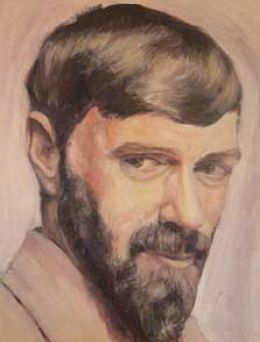
Biography David Herbert Lawrence (1885 - 1930)
English writer, novelist, poet, essayist, playwright and short story author
Also known as: D. H. Lawrence.
Also called: David Herbert Richards Lawrence.
Was born on 11 sep 1885.
Died on 02 mar 1930, at 44 years old.
Origin country United Kingdom
Quotes by David Herbert LawrenceBiography of David Herbert Lawrence
English writer, novelist, poet, essayist, playwright and short story author, one of the important voices of modernist literature.
David Herbert Lawrence, known in literature especially as
D. H. Lawrence, was a complex, intense and often controversial English writer, whose work changed the way literature speaks about instinct, love, the body, freedom and the conflict between the individual and society.
He was born in Eastwood, Nottinghamshire, into a modest family. His father was a miner, while his mother came from a more educated background and had cultural aspirations for her children. This tension between the harsh world of physical labor and the desire for intellectual refinement deeply marked Lawrence’s childhood and would reappear, in different forms, in many of his novels.
The industrial environment of the mining region, with its harsh landscapes, working-class families, domestic conflicts and strong social contrasts, became one of the main sources of his literary imagination. Lawrence did not look at this world only from the outside, but transformed it into a space of intimate tensions, repressed desires and the struggle for identity.
In his youth he worked as a teacher, but fragile health and his literary calling gradually drew him away from this career. He began publishing poetry and prose, and his talent was noticed fairly quickly. His early novels attracted attention through their emotional honesty and through the direct way in which they approached relationships between men and women, family, social class and inner life.
One of his most important novels is
Sons and Lovers, a work with autobiographical accents, in which Lawrence explores the relationship between a young artist, his mother and the women in his life. The book subtly captures the conflict between family attachment, the desire for independence and the need for emotional maturity.
Through novels such as
The Rainbow and
Women in Love, Lawrence consolidated his reputation as a modernist author concerned with the depth of human relationships. He does not describe love as a simple romantic story, but as a disturbing force, capable of liberating, but also of wounding. His characters seek a form of authenticity in a world that imposes conventions, rules and social masks upon them.
Lawrence’s work provoked strong reactions in his time. Some of his books were considered scandalous, and the novel
Lady Chatterley’s Lover became famous not only for its literary value, but also for the controversies related to sexuality, language and freedom of expression. For Lawrence, however, eroticism was not simple provocation, but an essential part of existence, connected to vitality, sincerity and the refusal of social falseness.
D. H. Lawrence was an author who refused comfortable conventions. In his writings, modern man often appears cut off from nature, from instinct and from his own inner energy. He criticized the mechanization of life, moral rigidity, social hypocrisy and the transformation of people into cold beings dominated by external rules.
An important element of his work is the relationship between human beings and nature. For Lawrence, nature is not just a setting, but a living, mysterious force, sometimes violent, sometimes healing. Landscapes, animals, seasons and physical sensations become, in his texts, expressions of a deeper life that modern civilization risks suffocating.
Lawrence’s personal life was as restless as his work. His marriage to Frieda von Richthofen, an independent and unconventional woman, was decisive for his existence. Together they travelled widely, living in Italy, Germany, Australia, Mexico, the United States and other places. These journeys fed the writer’s imagination and offered him new perspectives on cultures, landscapes and ways of life.
Lawrence was also a poet, essayist, short story writer, literary critic and travel writer. This diversity shows his creative restlessness and his desire to understand the human being from several angles. He wrote about art, religion, psychology, nature, civilization and the tension between individual freedom and the pressure of society.
His literary style is intense, sensory and full of energy. Lawrence seeks to render not only what his characters think, but also what they feel in the body, in instinct, in reactions that are difficult to formulate. His writing can sometimes be harsh, passionate or unsettling, but precisely this force makes it memorable.
Because of his fragile health, especially his lung problems, Lawrence lived constantly under the sign of vulnerability. He died in France, at Vence, at only 44 years of age. Although his life was short, the work he left behind is vast and influential.
The legacy of
David Herbert Lawrence remains powerful. He was a writer who dared to touch uncomfortable themes and to question the official morality of his age. He wrote about love, desire, family, nature and freedom with an intensity that continues to challenge readers.
Today, D. H. Lawrence is considered one of the important figures of modern English literature. His work attracts through its sincerity, psychological force and the way it explores the conflict between authentic life and the constraints of a rigid society. He remains an unsettling, vivid and hard-to-ignore author.
Important milestones
- Full name:
David Herbert Lawrence - Known as:
D. H. Lawrence - Nationality: English
- Fields: novel, poetry, essay, short prose, theatre, literary criticism, travel writing
- Known works:
Sons and Lovers,
The Rainbow,
Women in Love,
Lady Chatterley’s Lover - Frequent themes: love, sexuality, family, instinct, nature, freedom, social conflict, modern alienation
- Literary style: intense, sensory, psychological, passionate and modernist
Why is David Herbert Lawrence important?
David Herbert Lawrence is important because he opened English literature toward more sincere and courageous areas of inner life. He wrote about desire, the body, love and freedom in a way that challenged the norms of his time and strongly influenced modern literature.
Through his novels, poems and essays, Lawrence showed that the human being cannot be understood only through reason or social rules, but also through instinct, emotion, nature and the deep need for authenticity. For this reason, he remains an essential author for readers interested in modernist literature, psychology, human relationships and freedom of artistic expression.


