Saint Matthew the Apostle (Levi)
vote now
add a comment
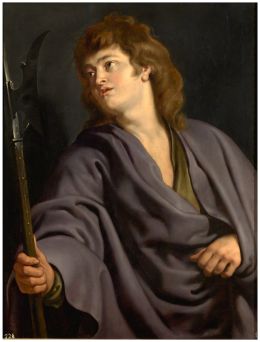
Biography Saint Matthew the Apostle
Apostle and Evangelist
Also known as: Levi.
Origin country Israel
Saint Matthew (also known as Matthew the Apostle or Levi) was one of the twelve apostles of Jesus Christ and is traditionally considered the author of the Gospel of Matthew. His life is shrouded in mystery, but his writings and mission have remained fundamental to early Christianity and the development of biblical theology.
Origins and Call of Jesus
Matthew was born in the 1st century AD, most likely in Capernaum, a town in Galilee. No exact date of birth or death is known, but tradition places his life between 5 and 70 AD. Before becoming an apostle, he worked as a tax collector, collecting taxes for the Roman Empire, a profession looked down upon by the Jews.
Jesus' call is recounted in the Gospels: "Follow me!", and Matthew immediately left the collection table to follow Him. This radical change of life is a symbol of conversion and a call to faith.
The Gospel of Matthew
Christian tradition attributes to him the writing of the Gospel of Matthew, the first of the Synoptic Gospels in the New Testament. Although modern research considers it an anonymous writing, the Church preserves this tradition. Its text has a clear structure and is deeply anchored in the fulfillment of Old Testament prophecies, emphasizing that Jesus is the awaited Messiah.
This Gospel has become one of the most influential Christian writings, being intensely quoted in the liturgy and in the writings of the Church Fathers.
Mission and martyrdom
After the Ascension of Christ, Saint Matthew went on evangelical missions. Tradition states that he preached in Ethiopia, Persia, and other regions of the Near East. He is believed to have been martyred for his faith, although the exact place and year of his death are not confirmed – some sources place his death around 70 AD.
His relics are venerated in Salerno (Italy), where the cathedral dedicated to Saint Matthew houses the relics of the evangelist.
Veneration and symbol
He is celebrated on September 21 in the Roman Catholic Church and on November 16 in the Orthodox tradition.
He is considered the patron saint of accountants, bankers, tax collectors, and officials.
In iconography, he is often represented with an angel or a winged man, a symbol of divine inspiration in the writing of the Gospel.
Spiritual legacy
Saint Matthew remains a symbol of conversion and hope – proof that anyone can leave the past behind to answer God's call. The gospel attributed to him is a pillar of the Christian faith and continues to inspire millions of people with its message of love, forgiveness, and the fulfillment of divine promises.
Comments
Rate this author:
By Peter Paul Rubens - http://www.artbible.info/art/topics/rubens-apostles-series, Public Domain, Link


